
A flooded basement can quickly turn into a serious property problem. Standing water can damage flooring, drywall, insulation, furniture, and stored belongings while moisture spreads into hidden areas of the structure. For homeowners in Pearland, TX, heavy rainfall, slow drainage, plumbing failures, and groundwater intrusion can all contribute to basement water damage. Removing visible water is only the first step; professional restoration also requires identifying hidden moisture, drying affected materials, and addressing conditions that could lead to mold growth.
Prestige Restoration and Cleaning Services provides professional water damage restoration with 24/7 emergency response, water extraction, structural drying, industrial dehumidification, sanitization, and reconstruction coordination. Established in 1996, the company is IICRC-certified and BBB-accredited, helping property owners respond to water damage with a coordinated restoration process.
Why Flooded Basements Are a Problem in Pearland, TX
Pearland’s local landscape can create challenging drainage conditions during heavy rainfall. The area spans Brazoria, Harris, and Fort Bend counties, where relatively flat terrain and clay soil can slow water movement. Homes near Clear Creek and properties in low-lying subdivisions may experience drainage challenges when rainfall overwhelms surrounding areas.
Several issues in flooded basements can contribute to a flooded basement or lower-level water intrusion.
Heavy Rainfall and Poor Drainage
When heavy rain falls faster than the surrounding ground can absorb or redirect it, water may collect around a home’s foundation. Poor grading, clogged drainage systems, and saturated soil can increase the likelihood of water entering through foundation openings or basement walls.
Plumbing Leaks and Pipe Failures
A burst pipe, leaking water supply line, or failed plumbing connection can release substantial amounts of water into a basement. Even when the leak is stopped quickly, water may spread beneath flooring, behind walls, and into insulation.
Foundation Cracks and Water Intrusion
Small foundation cracks or gaps around utility penetrations can allow moisture to enter during periods of heavy rain or elevated groundwater. Repeated water intrusion can damage finishes and create persistent damp conditions, and result in a flooded basement.
Drainage and Sewer Problems
A blocked or overwhelmed drainage system can contribute to water entering lower levels. If flooding involves sewage or contaminated water, the cleanup requirements are more complex and should be handled by trained restoration professionals.
What to Do Immediately After a Flooded Basement
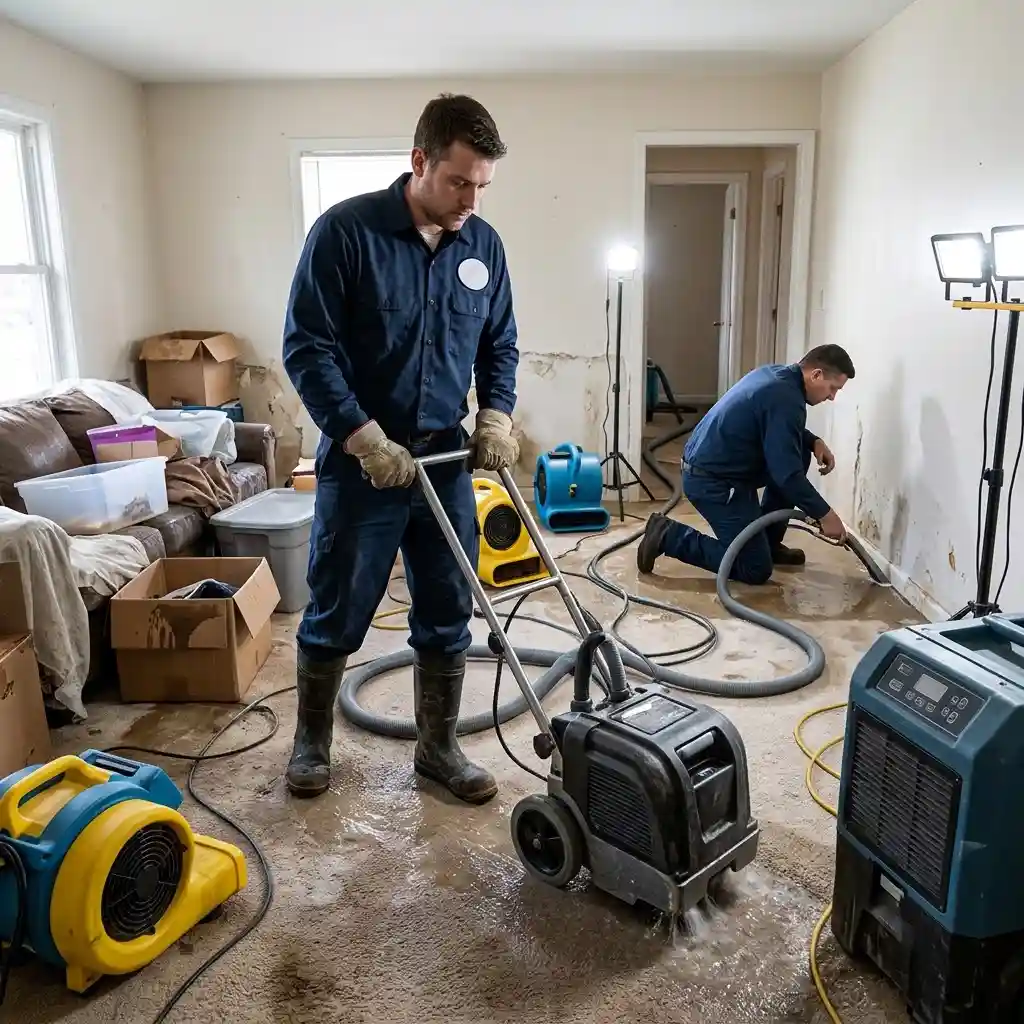
The first response can influence how much damage a property experiences. However, safety must come before cleanup of a flooded basement.
- Avoid entering standing water if electricity may be present. Do not walk into a flooded basement until the electrical supply has been safely disconnected by a qualified person. Never touch electrical equipment while standing in water.
- Stop the water source if it is safe. If a plumbing failure is responsible, shut off the main water supply when it can be reached safely.
- Protect belongings without taking risks. Move valuables and furniture away from affected areas only if access is safe. Do not attempt to lift heavy waterlogged items alone.
- Contact a professional restoration team. Arrange emergency water extraction and assessment before moisture spreads further into the building.
- Document visible damage. Take photographs and videos from a safe location to help support an insurance claim.
Avoid using ordinary household fans or electrical appliances in a Flooded Basement area before it has been assessed for electrical safety. Floodwater may also contain contaminants, so direct contact should be avoided.
Why Fast Water Extraction Matters in Flooded Basement
Water does not remain limited to the area where it first collects. It can move through carpet padding, flooring seams, drywall, insulation, and other porous materials. Even after the visible water disappears, moisture may remain trapped inside building materials.
This is why a flooded basement needs more than basic pumping or mopping.
Prestige Restoration and Cleaning Services provides emergency water extraction to remove standing water from affected properties. Its restoration process also includes structural drying and industrial dehumidification to help remove moisture from the building.
The first 24 to 48 hours after a water event are particularly important because prolonged dampness increases the risk of secondary damage and mold growth. Prompt extraction and controlled drying can help limit the extent of restoration work required.
Professional Flooded Basement Restoration Process
A successful restoration project addresses both visible damage and moisture that cannot be seen. Prestige Restoration and Cleaning Services uses a coordinated process to help return affected structures to a dry and usable condition.
Emergency Water Extraction
The first stage involves removing standing water from the basement and other affected areas. Professional extraction equipment can handle water more effectively than household cleaning tools, particularly when larger areas or saturated materials are involved.
Moisture Mapping and Structural Assessment
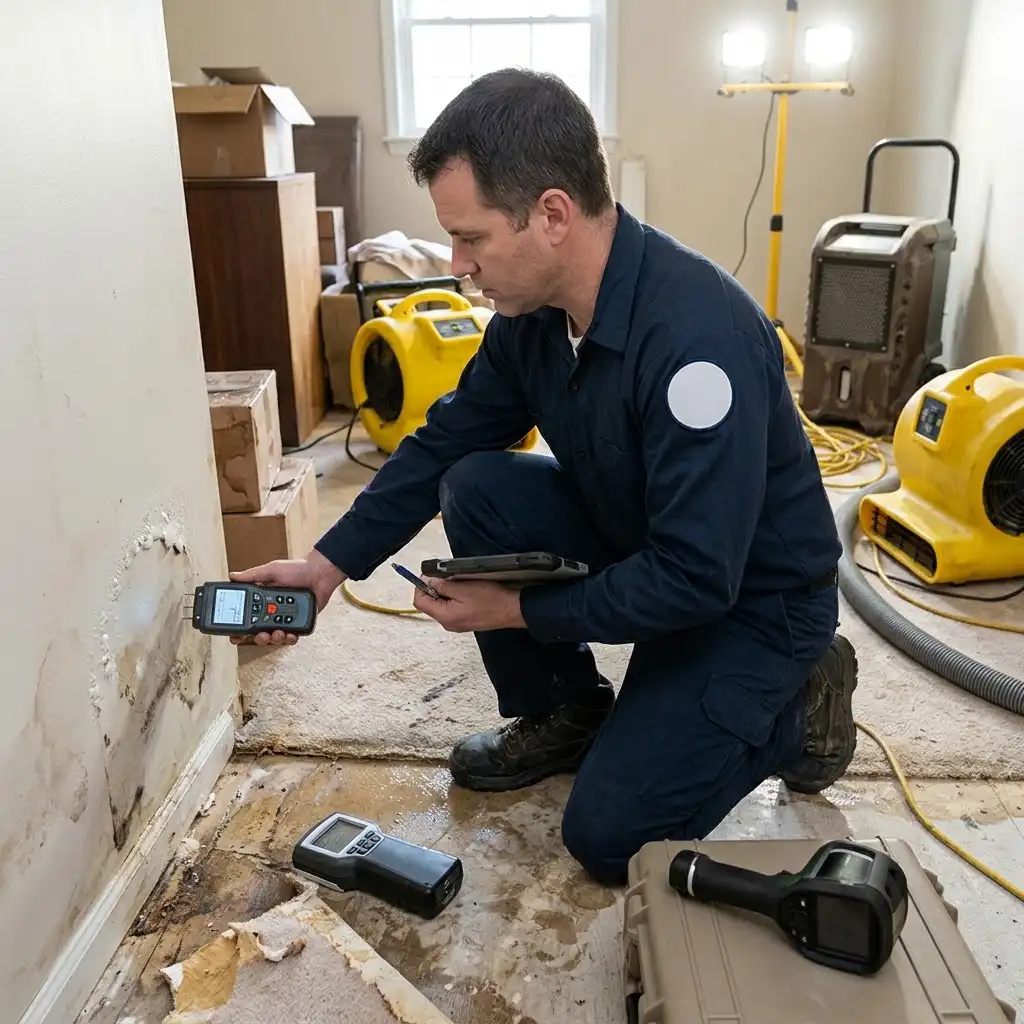
Water can travel behind walls and underneath flooring without leaving obvious surface signs. Moisture mapping helps technicians identify affected areas and locate hidden water that may otherwise be overlooked.
This assessment helps determine which materials can be dried and which may require removal.
Industrial Drying and Dehumidification
After extraction, professional drying equipment and industrial dehumidifiers help remove remaining moisture from the structure. Technicians monitor affected areas to evaluate drying progress rather than relying only on whether surfaces feel dry.
Removal of Damaged Materials
Some materials cannot be restored if they have absorbed significant water or become contaminated. Depending on the damage, affected drywall, insulation, and flooring may need to be removed.
Removing damaged materials can also help expose concealed moisture and prepare the area for proper drying.
Sanitization and Odor Treatment
Once the structure is dry, appropriate sanitization and odor treatment can help address lingering contamination and unpleasant smells. The treatment depends on the source and category of water involved.
Reconstruction Coordination
When extraction, drying, and necessary removal work are complete, the property may need rebuilding. Prestige coordinates reconstruction after the drying process so homeowners have support beyond the initial cleanup.
An Illustrative Pearland Basement Flood Restoration Situation
Consider a hypothetical Pearland homeowner whose basement takes on water after several days of heavy rain. The water collects along one wall and spreads across the flooring. Furniture and stored boxes become wet, while moisture begins affecting the lower sections of drywall.
The homeowner initially removes a small amount of visible water but notices that the floor remains damp and a musty odor develops. A professional restoration assessment identifies moisture beneath the flooring and behind portions of the drywall.
The restoration team extracts the remaining water, maps the affected areas, removes materials that cannot be salvaged, and uses commercial drying and dehumidification equipment. After the structure reaches appropriate drying conditions, sanitization and reconstruction coordination can follow.
This example demonstrates why a basement should be assessed beyond its visible waterline. Hidden moisture can remain long after standing water has been removed.
Preventing Mold After a Basement Flood
Mold prevention is an important part of water damage restoration. Damp drywall, insulation, carpeting, and other materials can provide conditions that support mold growth when moisture is not addressed.
Homeowners should avoid covering wet walls with fresh paint or installing new flooring before the affected structure has been properly dried. Doing so can trap moisture and allow damage to continue behind finished surfaces.
Professional restoration focuses on identifying hidden wet areas, removing materials that cannot be saved, and using controlled drying methods. If mold growth is already present, additional mold remediation may be necessary.
Prestige Restoration and Cleaning Services also provides mold remediation, allowing homeowners to discuss related restoration needs with the same company.
Why Choose Prestige Restoration and Cleaning Services?
A flooded basement can involve multiple restoration challenges, from emergency extraction to structural drying and reconstruction. Choosing an experienced restoration company helps ensure that the process addresses more than the water visible on the floor.
Prestige Restoration and Cleaning Services offers:
- 24/7 emergency response: Restoration crews are available around the clock for urgent water damage calls.
- IICRC-certified technicians: The company identifies its technicians as IICRC-certified.
- Established experience: Prestige has been in business since 1996.
- BBB accreditation: The company identifies itself as BBB-accredited.
- In-house crews: Its restoration work is handled by in-house crews rather than subcontracted teams.
- Insurance documentation: Moisture readings and damage documentation can support the insurance claim process.
The company serves Pearland and other communities across the greater Houston area. Its water damage restoration services include emergency extraction, structural drying, moisture mapping, removal of damaged materials, sanitization, and reconstruction coordination.
Restore Your Flooded Basement With Professional Help
A flooded basement should never be treated as a simple housekeeping problem. Water can spread into hidden spaces, weaken building materials, damage personal belongings, and create conditions for mold growth. Professional extraction, moisture mapping, structural drying, and restoration help address the full extent of the damage.
Prestige Restoration and Cleaning Services provides 24/7 water damage restoration in Pearland, TX, with IICRC-certified technicians and a coordinated approach to cleanup and recovery. If your basement has flooded after heavy rain, a plumbing failure, or another water event, contact the team at 713-894-9856 for emergency assistance or a free damage assessment.
Frequently Asked Questions
1. What should I do first when my basement floods?
Prioritize safety. Stay out of standing water if electricity may be present, shut off the water source if safe, and contact a professional restoration company for assessment and extraction.
2. How quickly should water be removed from a flooded basement?
Water should be extracted as soon as it is safe to do so. Prompt removal and structural drying help reduce the risk of additional material damage and mold growth.
3. Can a basement look dry but still have water damage?
Yes. Moisture can remain behind drywall, beneath flooring, and inside insulation after visible water has disappeared. Professional moisture mapping and drying equipment help identify these hidden areas.
4. Does basement flood restoration include mold prevention?
Professional structural drying and dehumidification help reduce conditions that support mold growth. If mold is already present, separate mold remediation may be required.
5. Will homeowners insurance cover a flooded basement?
Coverage depends on the cause of the water damage and the terms of the individual policy. Prestige can document damage and moisture readings to support the claim process, but the insurer determines coverage.